



How a National Veterinary Network Cut False Alarm Fines and Improved Video Investigations
A multi-state veterinary hospital network replaced a fragmented vendor model with a single accountable partner, cut false alarm penalties at its highest-risk sites, and made video evidence faster to retrieve for investigations.
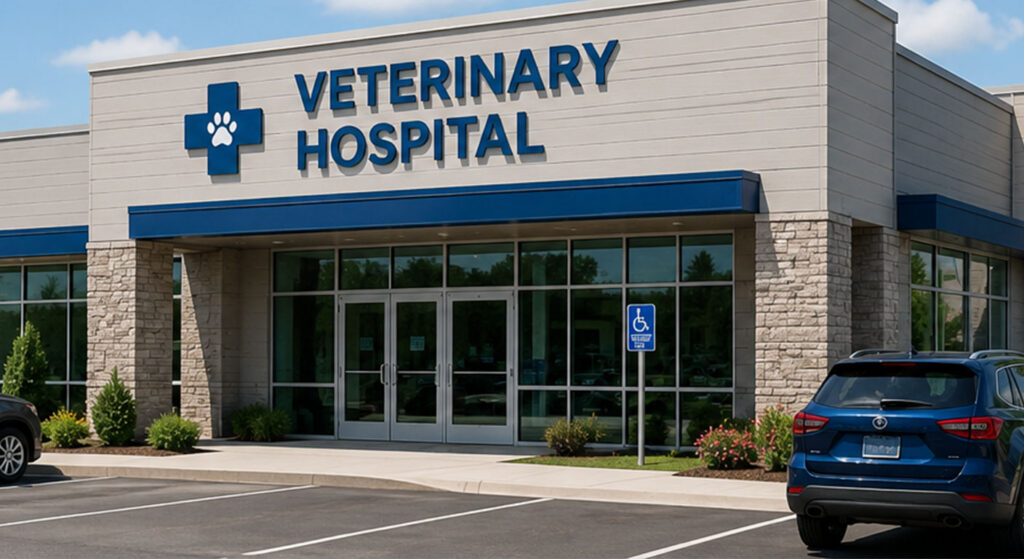
A national veterinary hospital network operating more than 1,000 locations across the United States set out to deliver consistent security, compliance, and safety across its locations spanning standalone clinics and sites inside retail centers. The goal was the same everywhere: protect associates, clients, and assets.
INDUSTRY
Veterinary care
FOOTPRINT
1,000+ U.S. locations
DEPLOYMENT
Video Verified Alarm at approximately 300 standalone hospitals
97%
63%
Key Challenges
-
Inconsistent vendor support and poor system utilization
The veterinary network previously relied on a large security service provider for its Video Management System and intrusion alarm monitoring. Service and support fell short, and inconsistent training led to low system adoption and unreliable monitoring. When Interface assumed responsibility for the chain’s physical security, it also found non-functional intrusion devices at multiple locations, exposing the business to unacceptable risk. -
Recurring false alarm fines
False alarm fees became a recurring cost that ate into location profitability. Roughly 300 standalone hospitals fell under municipal false-alarm policies, with fines that ranged from $500 to $1,000 per event depending on the jurisdiction. In some cases, those penalties reached several thousand dollars per month at a single location, a meaningful drag on the chain’s margins. -
Time lost to routine alarms
Because routine alarms and security issues demanded constant attention, the veterinary network’s risk management team spent disproportionate time on reactive work. That left less room for the proactive priorities the team owned across the footprint, including regulatory compliance, health and safety initiatives.
The Solution
The veterinary network selected Interface to replace a fragmented vendor model with a single accountable partner for enterprise-wide video management and alarm monitoring.
-
Responsive support and higher adoption
Interface took over day-to-day support for the existing Video Management System and the alarm monitoring program. With responsive support, structured onboarding, and improved training, the veterinary network increased Video Management System adoption across the majority of its locations and made video easier to use for investigations, incident review, and cross-functional collaboration.
Teams now rely on the Video Management System as a core investigation tool, including when exception reporting flags potential fraud. Because incidents are not tied to a point-of-sale timestamp, teams use attribute-based search and mobile access to locate key moments quickly from desktops, phones, or tablets. -
Video Verified Alarm at the highest-risk sites
Interface upgraded traditional alarm monitoring to Video Verified Alarm to rule out false alarms and improve law enforcement response times. The chain selected about 300 hospital locations with the highest exposure to municipal false-alarm penalties for deployment.
Interface executed the rollout remotely with a standardized migration approach that minimized operational disruption at each location.
Results Delivered
-
Faster investigations
With Video Management System access standardized across all the locations, internal teams retrieve and review video evidence faster for investigations and incident reviews, including workers’ compensation cases and legal matters. Mobile access and advanced search reduce time-to-evidence when an incident does not map to a register timestamp or point-of-sale record. -
Reduced false alarm fees
By upgrading to Video Verified Alarm, the veterinary network reduced false alarm fines at approximately 300 standalone hospitals where nuisance alarms had been a recurring issue. This brought faster cost control to the locations that historically drove most of the penalties. Across the monitoring period, 97% of alarm events were verified as false alerts. Only the remaining 3% of the alarm events resulted in a police dispatch thus eliminating false alarm penalties.
-
Improved maintenance and support
Interface implemented proactive monitoring of intrusion device health to maintain system uptime and trigger timely maintenance visits. Proactive monitoring reduced escalation tickets and lowered the troubleshooting workload for the risk management team. Interface resolved 63 percent of service requests remotely, and exceeded its mean time to repair goal at 94 percent against an 85 percent target. Hospital staff also gained a more user-friendly portal to manage video, alarm settings, and credentials without requiring assistance from Intreface.
Interface resolved 63% of service requests remotely, without dispatching a technician. Mean-time-to-repair compliance reached 94%, against an 85% target.
Looking Ahead
The veterinary network is evaluating expanded use of camera-based burglary detection and Virtual Perimeter Guard at higher-risk locations. Virtual Perimeter Guard combines AI-enabled cameras with expert remote intervention to reduce reliance on physical guards while ensuring proactive resolution of security threats.
Explore more case studies
National Discount Retailer

White Castle

Big Brand Tire & Service
Connect with Our Experts
Interface solution experts are ready to help you solve challenges. Set up a no-obligation, exploratory call now.
